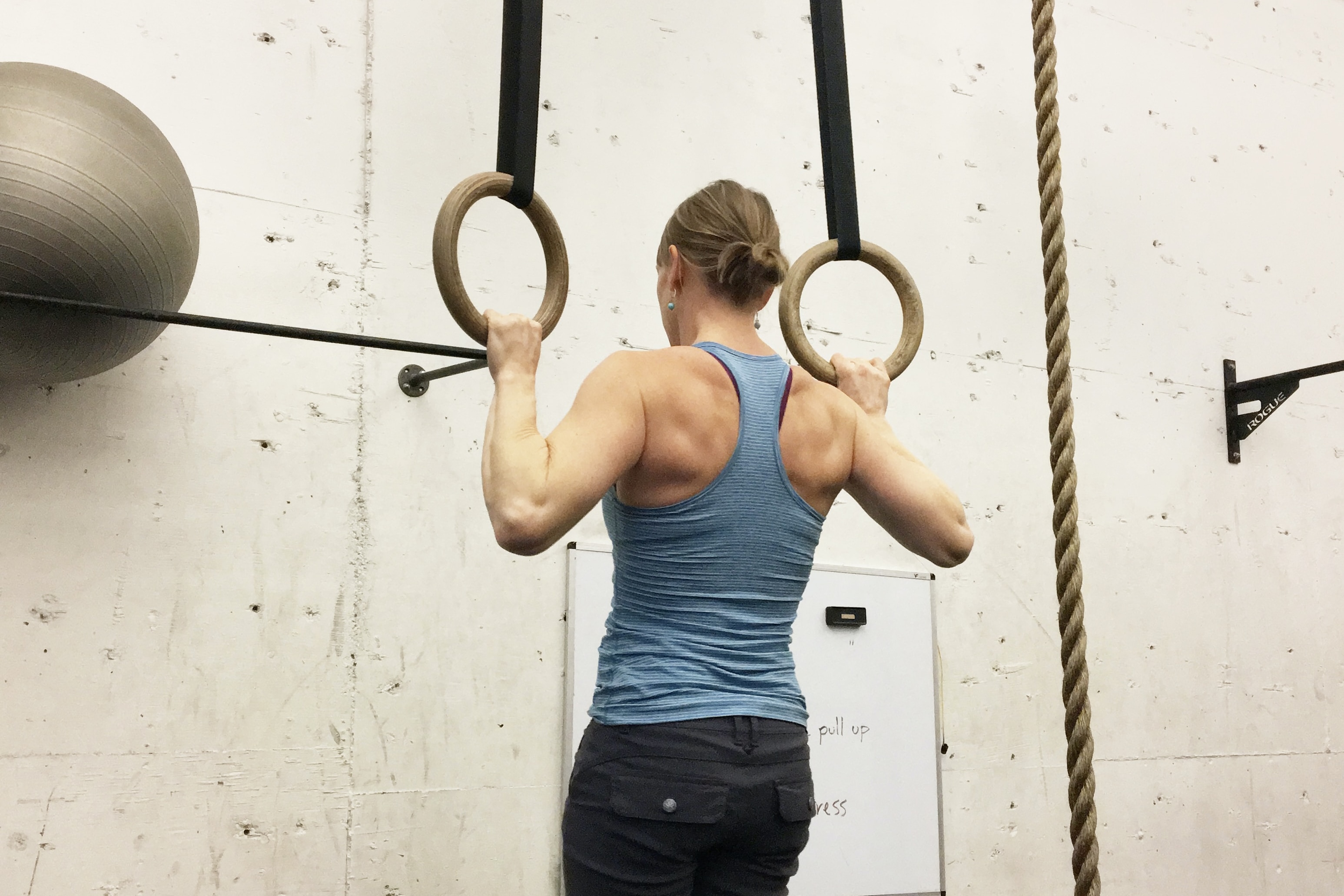
This was a memorable moment for me, and at the same time quite thought provoking. I was still in physical therapy school and this well built guy comes in to see me with shoulder pain. My diagnosis based on my level of education at that time…shoulder weakness, which was confirmed by my instructor. What came next was my favorite response ever. “What do you mean I’m not strong enough?”
My initial response was to tell him that it was some of the smaller muscles in the shoulder known as the rotator cuff. He was not spending enough time strengthening those specific muscles to help him stabilize.
Now in all fairness, he had a point. I mean, his biceps were the size of my head. While that may be an exaggeration, it was obvious he had spent a lot of time in the gym. So how did my reasoning make sense? How did he miss strengthening those muscles with all the exercises he was doing? Could he get that strong overall without strengthening those muscles more than my stretch bands were going to help?
Reflecting on my diagnosis, I can see that technically his rotator cuff was not working right, but “weakness” was not even close to appropriate. It was more a symptom than the issue. On the other hand, I was doing exactly what I learned in school.
So according to standard physical therapy practice I made the right call. What was the outcome? Slow progress and he was still having trouble 6 weeks after starting treatment. I couldn’t help feel like I was missing something. This turned into a fascinating rabbit hole.
It was later, I was introduced to proprioceptive neuromuscular facilitation. That was when the problem started to become clear. It was not how strong he was, but his ability to use his strength. He couldn’t use his muscles properly. It was a disconnect between the brain and the muscle.
So what causes someone to lose proper use of muscles? It frequently starts with a lifestyle habit, an injury, or other ailment. As we get older it could be sitting around too much. It could be a bad fall on the ice that was “just a bruise”. It could even be a bad sneeze or coming down a stair too quickly. It’s the bumps and bruises of life that start to add up.
As an example, let’s say you are in a car accident and get diagnosed with a whiplash disorder. Your doctor tells you to rest and take some medication. You do, and then you get “better” in about 6 weeks. But a few months after that you notice that you’re waking up with a stiff neck. That wasn’t there before the accident. Then a few months or a year later it starts to hurt again.
No this is not just “old age”. Your body healed the damage which is why you feel better, but it also tightened things up as a way of protecting itself from further damage. The problem? It’s tight where it shouldn’t be tight. Now you can’t move the same. That means your muscles can’t work how they’re supposed to, which causes you to compensate by using different muscles. Now your body is reinforcing the changes and the bad movements are now the normal movements.
How do you get it back to normal? This is where a physical therapist can help. By identifying the primary issue causing your problem you can finally start to find relief. Here at Realize Physical Therapy you can get targeted treatment that gets to the root problem that is keeping you from moving properly.
Now don’t get me wrong. There are people who are weak and just need strengthening. And properly guided strengthening can provide amazing improvements that will help a lot of people get out of pain. That is how the physical therapy profession was built. I know a lot of really good therapists who get people out of pain with strengthening. We can’t, however, box ourselves into “muscle imbalance”. It’s often not the problem.
If you’ve seen the strengthening road leave someone without improvement and wondered what else could help them, contact us to learn how you can help them get their life back.